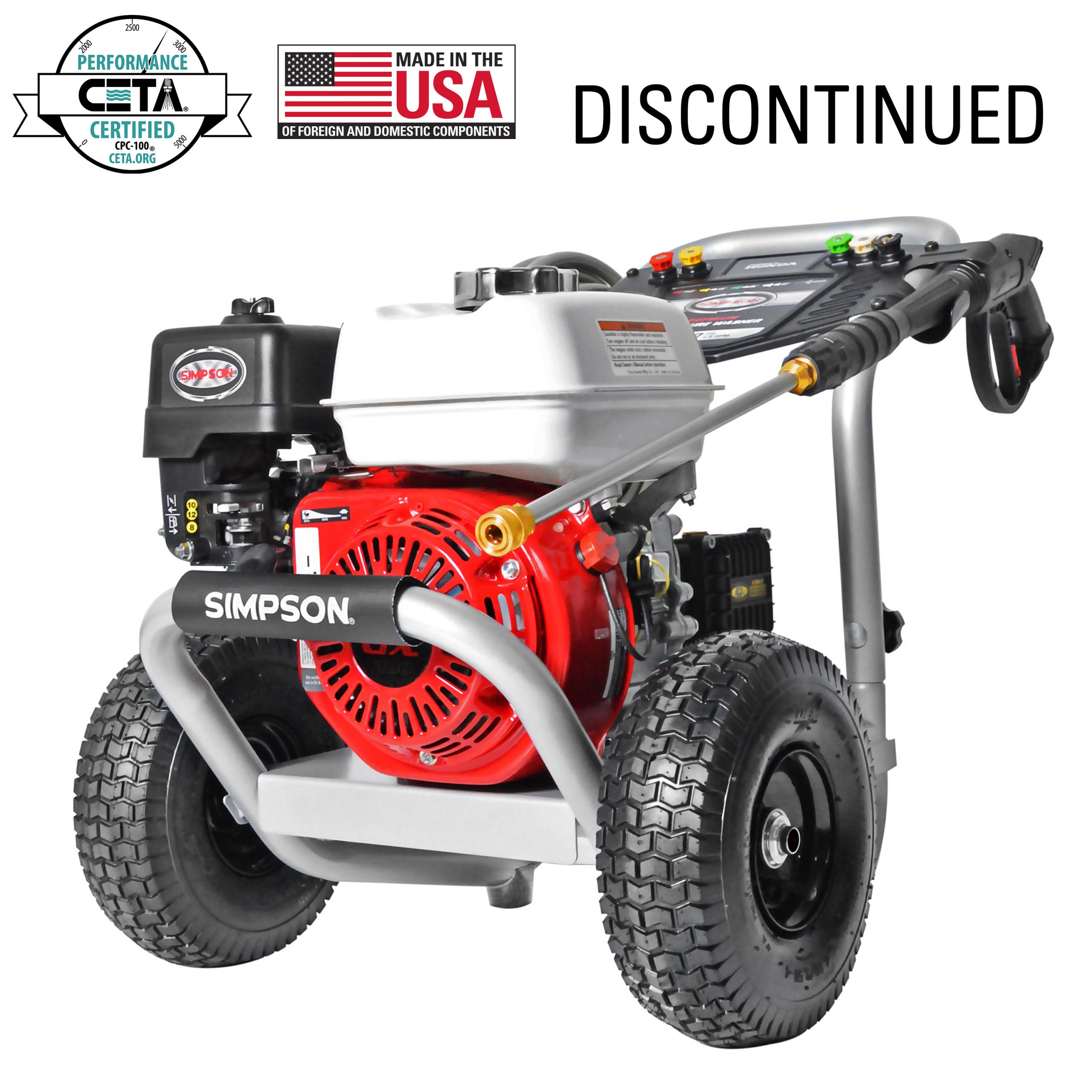
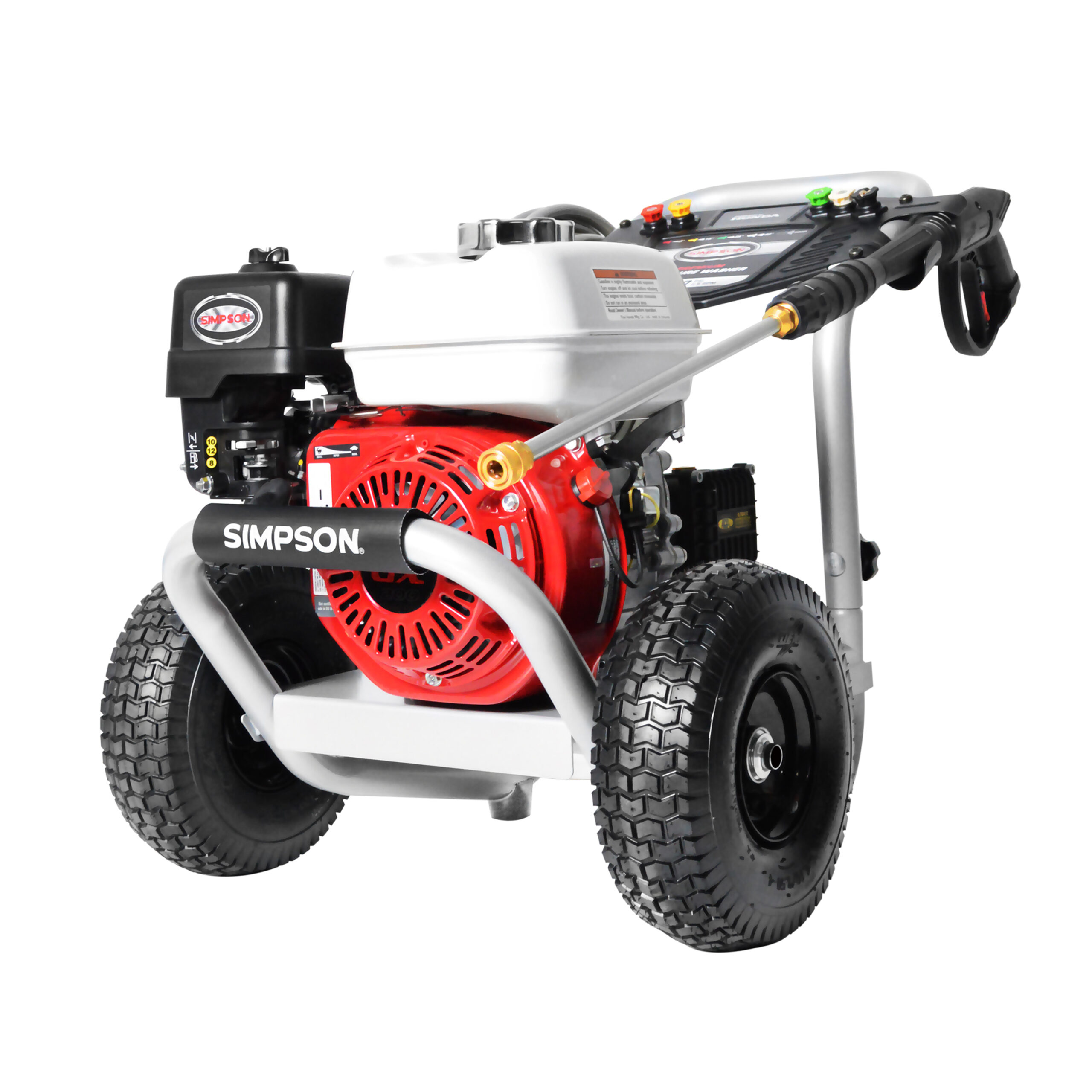
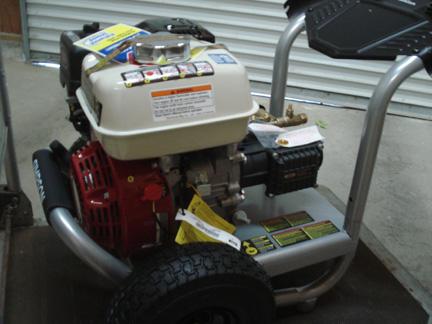
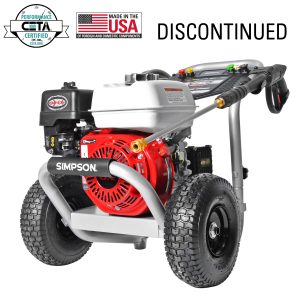
I hate to resort to a cliché, but the Simpson/Honda 3600 literally blew me away. Even though I have used commercial steam cleaners with much more kick, this was by far the most impressive home unit I have tried.
I searched and researched long and hard before settling on the Simpson. Forget for a minute there is not a lot to choose from where I live, but I read every online review I could find, and finally chose a model I felt suited my needs only to discover it was non CA approved.
I hit all the corporate stores (4) and the 2 or 3 pro-type equipment dealers in town and all were either low-end suburban units, or high-pressure upscale names which were at least 40% higher than the Simpson for essentially a lower power unit- no matter how it was branded.
The Kohler powered 3300 PSI model was actually the fist I truly felt could do the job and for sure wanted, but couldn’t justify the extra cash for 300 more PSI. But I knew if I settled, I would always have wondered how much the difference would have meant. So fate intervened, when I finally went to purchase, the 3300 was out of stock but they had the 3600- so, why not?
And it was by far one of the best decisions I have made, at least equipment-wise.
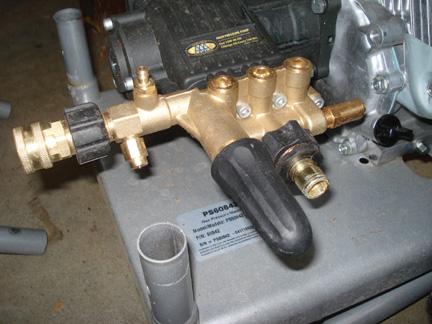
So after a review of the manual and a quick but thorough setup and, it started on the first pull and has done so ever since.
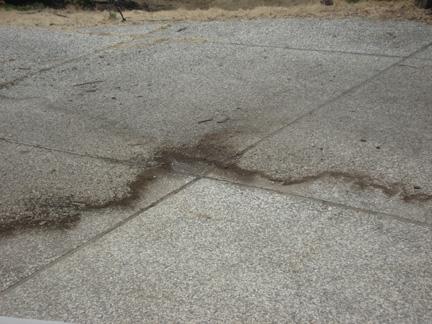
I was unprepared for that first blast, which just about knocked me on my butt and blew an accidental hole through the monstrous layers of moss embedded in the exposed aggregate driveway I am usually loath to clean. I knew at once I had made the right choice, and before I even had a chance to finish my setup- I prefer to have quick-disconnects on all the fittings- I had already cleared off about 150 square feet of driveway. Even if you don’t want all the details, if you have made it this far, and have any concerns, as a writer and reviewer of many products, take it from me when I say you can’t go wrong with this unit.
But somewhere along the way, I was re-examining the Kohler, it appears to be virtually identical in appearance, has the same pump and an engine of equal output- so I have to wonder why it’s downrated and sells for $200 less. I am tempted to find a high pressure gauge to check this out, perhaps this model is overclocked, which suggests a shorter pump life, of which users should be aware, and a disservice to those purchasing the less powerful unit.
While every step of setup and operation is spelled out by a plethora of numbered stickers, it’s not that complicated. I found the engine controls odd as the three levers that control fuel; throttle and choke are stacked so that the closed position is sort of out of order- but after a few uses it became second nature.
It started on the first pull, but because I did not memorize the controls, owing no doubt to the different engine suppliers, the frame and pump carry their own instructions, it also came with an authoritative Honda book. So, after it fired up I killed it immediately. It is somewhat counter-intuitive, with the choke being closed to the left, directly above it the fuel control, which closes to the right, above at is the throttle, which opens to the left. No big deal to sort out, but I might find a hand lever for the throttle on the bar would be worth building.
At full throttle it just about knocked me back. Of course, since I was jumping from a 2100 to a 3600 this shouldn't have come as a surprise. When I fit an optional angle adapter to the business end, the difference was dramatic, now all that power blowing at a 45° angle easily pulls the gun up and if you are not prepared, you’ll lose control.
(Just because I could, I set the wand on a scale and let it rip, it gave over 12 lbs of thrust, the resulting fatigue is something to be reckoned with when planning big jobs.)
As far as that goes, I found the dramatic pressure increase not only made worst job (moss and shingle asphalt imbedded in an aggregate driveway) much faster, you can be sure it cleaned more deeply than I have managed in 22 years of doing the task. .
Reports of excessive vibration are not to be applied to this model, even at full blast it is stable, I think pneumatic tires are a definite advantage in this respect.
The choice of patterns are typical, offering the usual array of color-coded nozzles from 0° to 40°, but there are more than enough aftermarket options available, and with the higher than home use, you can count on them wearing out that much faster. At this pressure, the needle spray is deadly and will slice through just about anything, including 1/8” Lauan packing board
While the fat, rubber encased hose connections are a help, I plan to invest in a set of quick disconnects for water supply as well as hose and wand.
When closing the wand valve the engine hunts two or three times in a way that reminds me of my old one right before it blew up, but this seems to be the normal way the pump unloads, even giving a backfire or two for added drama.
A few minor issues, at least for now: After my first few test runs, the wand valve would not shut off. I had a look and all seemed well, thinking the valve core might be stuck, I put a few drops of light oil into the inlet and operated it a few times- so far so good.
About the paint: besides the odd white color of the fuel tank, the exhaust shield is finished in a glossy black that would not really seem the best choice for a hot surface, but while reaching for the throttle I almost put my hand on it for balance. Another negative aspect of the exhaust is that it points directly at most of the controls and is hard to avoid, it makes operating the engine controls, pump regulator or water supply a challenge, I picked up another warning scorch when I was operating the regulator, if available and not a violation of the warranty, an aftermarket muffler might rectify this situation.
Another thought about the regulator, it is pretty tight going to adjust it while in use, and this is compounded by being boxed in by the frame handle and the fresh water supply. If necessary, I will be only making changes when it’s not running, but this is not very convenient. I am tempted to pick up a wand regulator for on-the-fly adjustments, it’d be a whole lot easier to dial in.
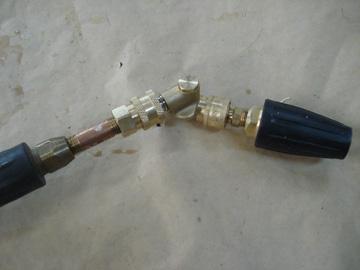
The included hose is a huge improvement over the type usually found on inexpensive washers, but as I already have 2 tried and true heavy duty 25 foot hoses with quick connects in place, I figured I may as well keep the factory one for special purposes- my first case was when I cleaned out shower, having a sparkling bright gray hose snaking through the bathroom drew a lot less stinkeye from the boss than when I used my rugged but nasty black cloth covered ones. But outdoors and in very rough surfaces they have given me well over 15 years of rough service without a problem. (Stock wand being unwieldy for a confined space, I made up a 3” barrel and added a QD, the swivel and turbo, as pictured.)
I really love the lowslung form factor of the unit, it tucks nicely under a workbench when not in use and is, if nothing else, way cooler looking than the typical weekend warrior lawnmower style. It is fairly well balanced, although a bit front heavy, and can be lifted singlehandedly.
Hose and wand storage probably looked great on paper or static display, but with a charged hose attached, it’s a little hard to twist the wand into the up-then-down position needed for even a quick rest. It has the feature of not threatening the trigger, but needs some attention. And with improper placement, or especially with an extended nozzle, it seems to always find and flip the engine kill switch.
On the other side, the hose holder is great for the stock hose, not so for the heavier ones I use, and just not large enough for two or more connected together. But since both appear to be intended for storage rather than used, I can live with it.
The detergent feed works better than previous experiences, but does require swapping nozzles when underway, or if you really don’t mind using a little extra cleaning solution, just leave it off.
For almost all of my upcoming needs, I fitted it with a Blue Hawk Turbo Nozzle, a similar design like I have used for years but rated to 400PSI. It adds so much more power and a smooth, even pattern that I can imagine using the factory tips for mundane things like wall washing and lightweight washing.
Don't forget: the additional output means looking a littler more closely at the rating of accessories. Higher pressure rated items are a bit pricier and not as common, but as mentioned in my review elsewhere of a 4000 rated turbo nozzle, these are essentially high-wear parts and should not be expected to survive continuous use for more than a few hundred hours.
This reminds me, and a note to the manufacturer if they happen to see this, since most service is based on run time, a Hobbs meter would be a very cool feature to add. Despite having no onboard voltage, ones that use vibration for a reference can be had for under $20.00. Make this your second aftermarket purchase after you get some quick disconnects.
If you made it this far; thanks. If you pick up on my enthusiasm for the Simpson and it is helpful for you, I feel you won’t be disappointed by choosing this machine.